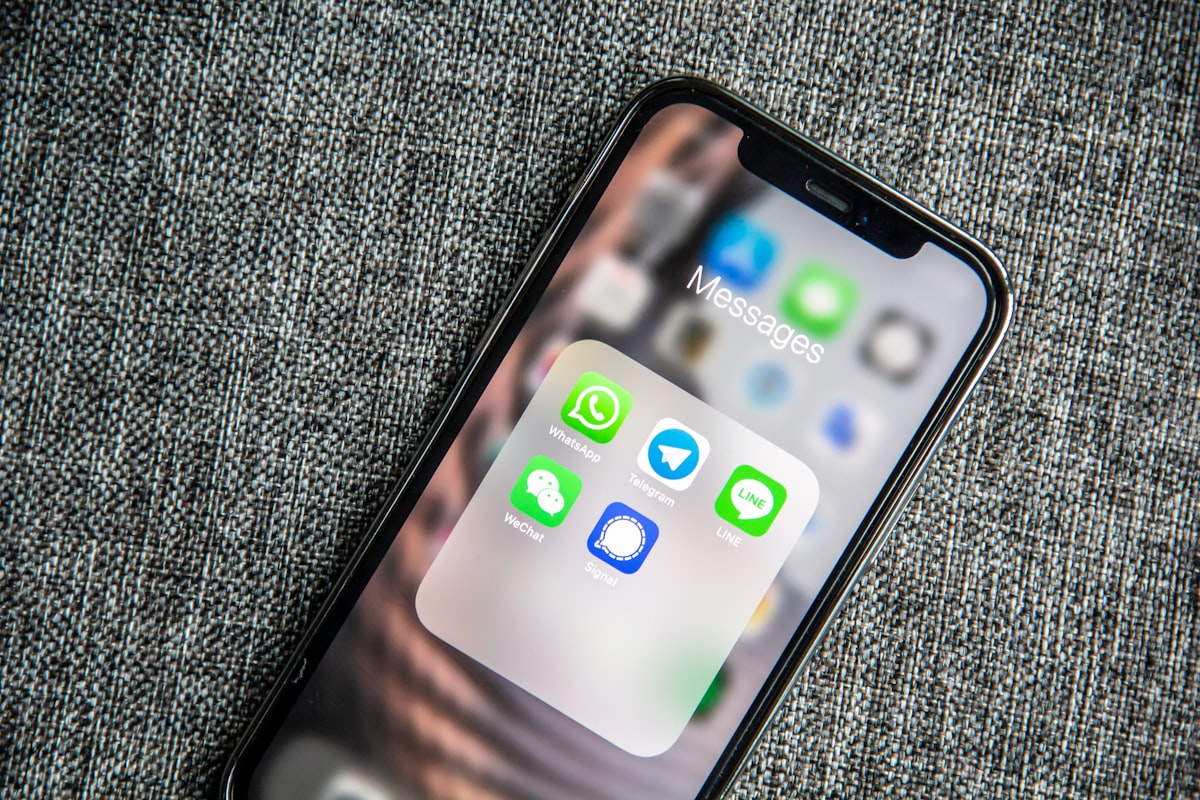
WhatsApp is the de facto storefront for Lebanese SMEs in Beirut, Tripoli, and beyond. We break down how to set up WhatsApp Business properly in 2026, what to automate, and how to stop leaking sales between Instagram DMs and your sales team.
The short answer
For most Lebanese SMEs, WhatsApp is the single highest-converting channel you have, and it is also the most poorly run. To make it work in 2026 you need a verified WhatsApp Business profile, a structured catalog, three to five well-written automated replies, response times under five minutes during business hours, and a clear handoff between your Instagram DMs, your website forms, and your WhatsApp inbox. Get those basics right and most businesses see a real lift in close rate within the first month.
Why WhatsApp is the real storefront for Lebanese businesses
WhatsApp adoption in the Middle East is staggering. Roughly 75% of nationals across seven major MENA countries use WhatsApp regularly, and Gulf-region penetration sits above 90%. In Lebanon, WhatsApp is not a marketing channel, it is the default communication channel between customers and almost every kind of small business: restaurants, salons, retailers, clinics, hotels, real estate brokers, and B2B services. Customers expect to reach you on WhatsApp before they ever consider phoning, emailing, or filling out a form.
That makes the platform both an opportunity and a trap. The opportunity is that a well-run WhatsApp inbox closes more deals than any ad campaign you can run. The trap is that most businesses run WhatsApp out of the founder's personal phone, with no automation, no shared inbox, no labels, no templates, and no structured handoff between Instagram, the website, and WhatsApp. That is where the money leaks.
How is WhatsApp Business different from regular WhatsApp?
WhatsApp Business is a free app, separate from the consumer app, that gives a business a proper profile, a product catalog, automated greetings and away messages, quick replies, labels for organizing chats, and basic analytics. For SMEs with one or two people answering messages, the Business app is enough.
Once you grow past that, you should move to the WhatsApp Business Platform (the API). The API lets multiple agents share an inbox through a CRM such as HubSpot, Zoho, or a regional tool, send template-based marketing messages at scale, integrate with your website chat, and automate flows like cart abandonment recovery, appointment reminders, and order confirmations. In 2026, Meta moved the platform to per-message pricing rather than per-conversation billing, so the cost calculus has shifted: utility messages inside a 24-hour service window are still effectively free, but marketing messages now have a clear per-send cost you should budget for. See also: How to Use a WhatsApp Chatbot for Your Lebanese Business in 2026 for the topic-specific playbook.
What does a 2026 WhatsApp setup actually look like?
Here is the stack we deploy for Lebanese SME clients at Voxire when they ask for a "WhatsApp upgrade":
- A green-tick verified WhatsApp Business profile with the correct logo, business hours, address, website, and a sharp one-line description.
- A clean product or service catalog inside WhatsApp itself, with prices in USD where relevant and a Lebanese phone number tied to the account, not a personal mobile.
- A short, warm automated greeting that fires when a customer messages outside business hours and explicitly tells them when they will hear back.
- Three to five quick replies for the questions you answer most often: pricing, location, delivery, opening hours, booking. Most teams discover that 70% of incoming messages are the same five questions on repeat.
- Labels that map to your sales pipeline (new lead, in conversation, quoted, won, lost) so the inbox doubles as a lightweight CRM.
- A "Click to WhatsApp" button on every important page of your website and in your Instagram bio, with a pre-filled message that tags the source. This is how you finally know whether your campaign traffic actually converted.
- A weekly review of the WhatsApp Business analytics: messages received, response rate, average response time. If your average response time during business hours is over an hour, you are losing deals before you know they existed.
How fast do Lebanese customers actually expect a reply?
Faster than most businesses think. Our internal data across Voxire clients shows that the close rate on a WhatsApp lead drops by roughly half once the first response takes longer than 15 minutes during business hours, and by another half once it crosses an hour. By comparison, a four-hour reply on email is still considered acceptable in most B2B contexts.
The implication is direct: WhatsApp is not a channel where you can rely on a single founder checking the phone between meetings. Either you commit to a five-to-fifteen-minute response window during business hours, with one team member fully responsible, or you set explicit expectations through an away message and a structured first reply. Pretending you have 24/7 coverage when you do not is the worst option, because customers feel ghosted and quietly move on to a competitor who replied in four minutes.
What should you automate, and what must stay human?
The simplest rule is: automate the predictable, keep humans in the loop for anything that involves money, complaints, or nuance.
Worth automating: the first greeting, FAQ-style answers (hours, location, basic pricing ranges, delivery zones), appointment reminders, post-purchase follow-ups, review requests, and cart abandonment nudges for e-commerce. Each of these saves a measurable amount of human time and improves the customer experience, because they get an instant answer instead of waiting.
Not worth automating: actual sales conversations, custom quotes, complaint resolution, technical support beyond level one, and anything that involves negotiating price. Lebanese customers are sophisticated, often multilingual, and they smell a chatbot quickly. The moment a conversation feels canned during a real sales discussion, trust drops and the deal is harder to close.
The right model is automated triage that quickly hands off to a human, not full automation that pretends to be human. We have seen this pattern work consistently across restaurants, retail, and services businesses we work with.
How does WhatsApp connect to the rest of your funnel?
This is where most Lebanese SMEs leak the most revenue, and it is also the easiest fix.
Your customer journey today probably looks like this: someone sees an Instagram post, DMs you on Instagram, you ask them to message on WhatsApp because it is easier, they switch apps, your website contact form goes unanswered for two days, and meanwhile a different lead from a Google ad disappears entirely because no one knew it came in.
A unified setup looks like this: every Instagram DM that turns into a sales conversation gets moved to WhatsApp with a templated handoff message. Every website form submission triggers an automated WhatsApp message to the lead within two minutes, opening a service window. Every Google ad and Meta ad uses a "Click to WhatsApp" CTA with UTM parameters so you can measure which campaign actually generates real conversations, not just clicks. And every WhatsApp conversation, regardless of where it started, lives in one shared inbox so any team member can pick it up.
Building that integration is exactly the kind of work a unified marketing and tech team handles in days rather than weeks of back and forth between agencies.
Where most Lebanese SMEs should start
If you are reading this and your WhatsApp setup is still a personal number with no automation, start with the boring foundation, in this order:
- Move to a dedicated WhatsApp Business account on a business number.
- Complete the profile and add a real catalog or service list.
- Write your three most important quick replies and your away message.
- Add a "Click to WhatsApp" button to your homepage, your Instagram bio, and your most-trafficked landing page.
- Pick one person who owns the inbox and a target response time during business hours.
That alone, before you spend a dollar on automation tools or API access, will move the needle for most businesses.
How Voxire can help
At Voxire we treat WhatsApp as a first-class part of every digital project we run for Lebanese clients, not an afterthought. We set up the WhatsApp Business profile, build the catalog, design the automated flows, integrate WhatsApp with your website forms and ad campaigns, and train your team on how to actually run the inbox. For larger clients we also build out the WhatsApp Business Platform stack with a shared CRM, segmented broadcast lists, and full conversion tracking. See also: Project Management Tools for Lebanese Businesses for the topic-specific playbook. See also: How to Use WhatsApp Catalog to Sell Products in Lebanon for the topic-specific playbook.
If you suspect your business is leaking deals between Instagram DMs, missed WhatsApp messages, and a website form no one checks, book a free call with Voxire and we will audit your current funnel and tell you honestly where the money is going.
Ready to grow your brand online in Lebanon?
Voxire runs data-driven digital marketing campaigns for Lebanese businesses. From social media to paid ads to content strategy, we deliver measurable results and transparent reporting.
→ See our digital marketing → Get a Free Quote → Chat on WhatsApp
Enjoying this article?
Enter your email and get a clean, formatted PDF of this article: free, no spam.
Voxire
Digital Marketing in Lebanon
Marketing for Lebanese businesses and brands selling into the Gulf. SEO, Google and Meta ads, content production, bilingual Arabic and English, and budgets sized for a market where every dollar of spend has to be defensible.
Learn more