
Most Lebanese businesses check their website traffic and stop there. But pageviews tell you almost nothing about why visitors leave without buying, booking, or contacting you. This guide explains which analytics tools actually matter, what to measure, and how to turn data into decisions that grow your business.
Most Lebanese businesses check their website traffic and stop there. But pageviews tell you almost nothing about why visitors leave without buying, booking, or contacting you. This guide explains which analytics tools actually matter, what to measure, and how to turn data into decisions that grow your business in Lebanon.
What Does "Web Analytics" Actually Mean for a Lebanese Business?
Web analytics is the practice of collecting, measuring, and interpreting data about how people interact with your website. For a Lebanese business, this means understanding not just how many people visit, but where they come from, what they do once they arrive, and crucially, whether they take any action that creates value for you.
A digital agency in Beirut running Google Ads, a restaurant in Hamra with an online menu, and an e-commerce store shipping across the Middle East all need different things from their analytics. What they share is a need to move past vanity metrics and focus on signals that are directly tied to revenue.
The most important shift in web analytics happened when Google replaced Universal Analytics with Google Analytics 4 (GA4) in 2023. GA4 uses an event-based model instead of session-based reporting. Every scroll, click, video play, and form submission is an "event," and you can attach parameters to each event to understand context. For Lebanese businesses still looking at bounce rate and session duration in an old Universal Analytics report, GA4 is a fundamental upgrade in how you understand user behavior.
Why Pageviews Are the Wrong Metric to Focus On
Pageviews measure how many times a page was loaded. They tell you nothing about intent, quality of traffic, or business outcomes. A page can receive 10,000 monthly views and generate zero leads if the audience is wrong, the page does not load fast enough on mobile, or there is no clear next step for the visitor.
Lebanese businesses often fall into the trap of celebrating traffic spikes that come from low-quality sources. A viral Instagram post might send 5,000 people to your homepage in a weekend. If those 5,000 people are not your customers, the spike is meaningless. This is why sessions, users, and pageviews should sit in the background of your analytics review while engagement metrics and conversion events sit at the front.
The metrics that actually predict business growth are:
- Conversion rate, the percentage of visitors who complete a goal (purchase, form submission, phone tap, WhatsApp click)
- Goal completions, the raw count of completed conversions by type
- Engagement rate: GA4's replacement for bounce rate, showing the percentage of sessions where users actively interacted with the page
- Scroll depth, how far users read down your pages before leaving
- Time to conversion, how many sessions and days pass before a visitor converts
- Traffic source quality, which channels bring visitors who actually convert vs. which ones bring curiosity traffic
Setting Up GA4 for a Lebanese Website: The Essentials
If you are running a Lebanese business website and have not migrated to GA4 yet, the first step is creating a GA4 property in Google Analytics, adding the measurement tag to your site (via Google Tag Manager or directly in your code), and configuring the four core conversions your site needs to track.
For most Lebanese business websites, the four core conversion events are:
- Contact form submission (or any lead generation form)
- Phone number click (Lebanese users click-to-call more than anywhere else in the MENA region)
- WhatsApp button click (essential for Lebanese and Arabic-speaking markets)
- Purchase completion (for e-commerce)
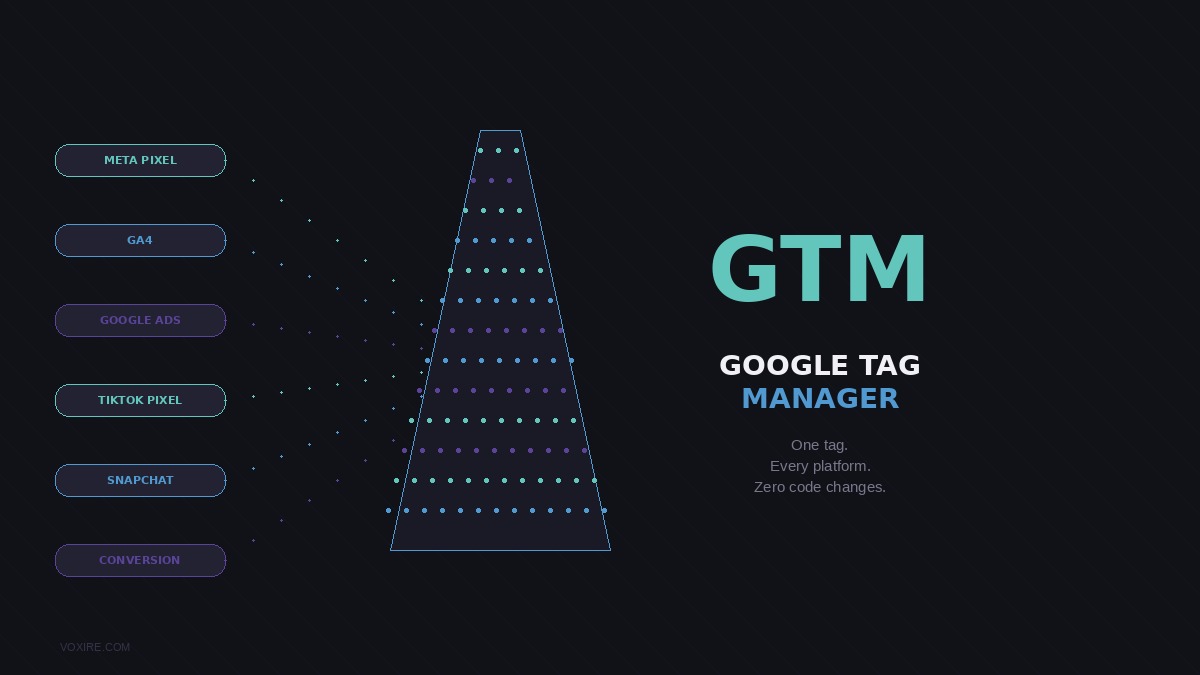
These events do not track automatically. You need to configure them in GA4 as goals, or mark them as conversion events. If you use Google Tag Manager, you can set up triggers for each of these without touching your website's code.
Once these are in place, your analytics stops reporting traffic and starts reporting business outcomes.
Heatmaps and Session Recordings: Seeing What Your Users Actually Do
GA4 tells you what happened in aggregate. Heatmaps and session recordings show you exactly how individual users interacted with your pages.
Tools like Hotjar, Microsoft Clarity (free), and Lucky Orange provide:
- Click maps showing where users click most often on a page
- Scroll maps showing where attention drops off on long pages
- Session recordings that replay individual user sessions including mouse movement and clicks
- Rage-click detection showing where users repeatedly click on non-interactive elements out of frustration
For Lebanese businesses, Microsoft Clarity is worth installing on every website because it is completely free and provides high-quality heatmaps and session recordings without a data cap. Connecting Clarity to your GA4 property also allows you to filter recordings by GA4 audience segments: for example, you can watch recordings specifically from users who came from Google Ads but did not convert.
A practical example: a Lebanese e-commerce store selling clothing noticed through Clarity that mobile users were repeatedly tapping on a product image that was not clickable. Users expected the image to zoom in or open a gallery. The store added a lightbox gallery to the product page and saw mobile conversion rate improve by 18% in the following month.
Attribution: Understanding Which Channel Actually Earns the Sale
One of the most common analytics blind spots for Lebanese businesses is misunderstanding which marketing channels actually drive conversions.
Last-click attribution, the default model in most analytics setups, gives 100% credit for a conversion to the last channel the user visited before converting. This systematically undervalues awareness channels like Instagram and YouTube, which introduce users to your brand long before they search on Google or return directly to your site.
GA4 includes a built-in attribution comparison tool that lets you compare how conversions are credited under different models: last click, first click, linear (credit split equally across all touchpoints), and data-driven (GA4's machine learning model based on your own data patterns).
For Lebanese businesses running both paid social and Google Ads, this comparison often reveals that social ads are contributing far more to conversions than last-click reporting suggests. When you see this, cutting social ad spend because it "doesn't convert" is actually cutting one of your most important top-of-funnel channels.
E-commerce Analytics: Product, Checkout, and Revenue Reporting
Lebanese e-commerce stores need a dedicated analytics layer beyond standard website tracking. GA4 Enhanced E-commerce allows you to track:
- Product list impressions and clicks
- Add-to-cart events
- Checkout funnel steps (where users drop off before paying)
- Purchase confirmation with revenue, tax, shipping, and product-level detail
- Refunds
Setting up Enhanced E-commerce requires either a developer to add the data layer events to your site, or a platform that does it automatically (Shopify does this natively with the GA4 integration).
The checkout funnel report in GA4 is especially valuable for Lebanese e-commerce stores. It shows the exact step where users abandon checkout: whether that is the cart page, the delivery address form, the payment page, or the order review. Each dropout point is a fixable problem. Common issues in Lebanese e-commerce include: lack of trust signals near the payment form, mandatory account creation before checkout, limited payment options, and high shipping costs revealed too late in the process.
Reporting That Actually Gets Used
Analytics data only creates value if it changes decisions. Building a weekly or monthly reporting habit around a small set of meaningful metrics is more valuable than accessing a comprehensive dashboard you never review.
A practical analytics review for a Lebanese business might look like this:
Every week: check conversion volume by source, spot any unusual traffic or drop in leads, check if any pages have high traffic but zero conversions.
Every month: compare conversion rate by channel, review the checkout funnel (for e-commerce), check if your highest-traffic landing pages have improving or declining engagement rates, look at the revenue or lead quality from each paid channel.
Every quarter: audit which pages drive the most conversions and why, check if your GA4 goals are still correctly tracking the actions you care about, and review the attribution model comparison to validate your channel mix.
Having robust analytics in place is only valuable if your site is built to act on that data. Voxire's web development in Lebanon team integrates GA4, Tag Manager, and conversion tracking from the ground up so your measurement layer works from day one.
Enjoying this article?
Enter your email and get a clean, formatted PDF of this article: free, no spam.
Not sure where to start?
Setting up proper analytics tracking, GA4 conversion events, heatmaps, and attribution reporting, takes a few days of focused work but pays back immediately in better marketing decisions. Voxire helps Lebanese businesses implement analytics setups that actually reflect how their customers behave. Get in touch to start a conversation.
Voxire
Digital Marketing
Paid media, SEO, content, and lifecycle marketing across MENA. Google Ads, Meta, TikTok and Snapchat, measurement that survives the loss of third-party cookies, and campaign structures built to be audited rather than admired.
Learn more