Lebanese restaurants are running on outdated tech, or worse, duct-taped combinations of WhatsApp orders, manual POS, and spreadsheet inventory. Here's what a modern restaurant tech stack looks like in 2026, and why most global solutions don't fit the Lebanese market.
The Lebanese restaurant tech problem
Lebanon has one of the most vibrant food and beverage scenes in the Middle East. It also has one of the most technologically underserved restaurant industries. The gap between the quality of the food coming out of Lebanese kitchens and the systems being used to run the business is striking.
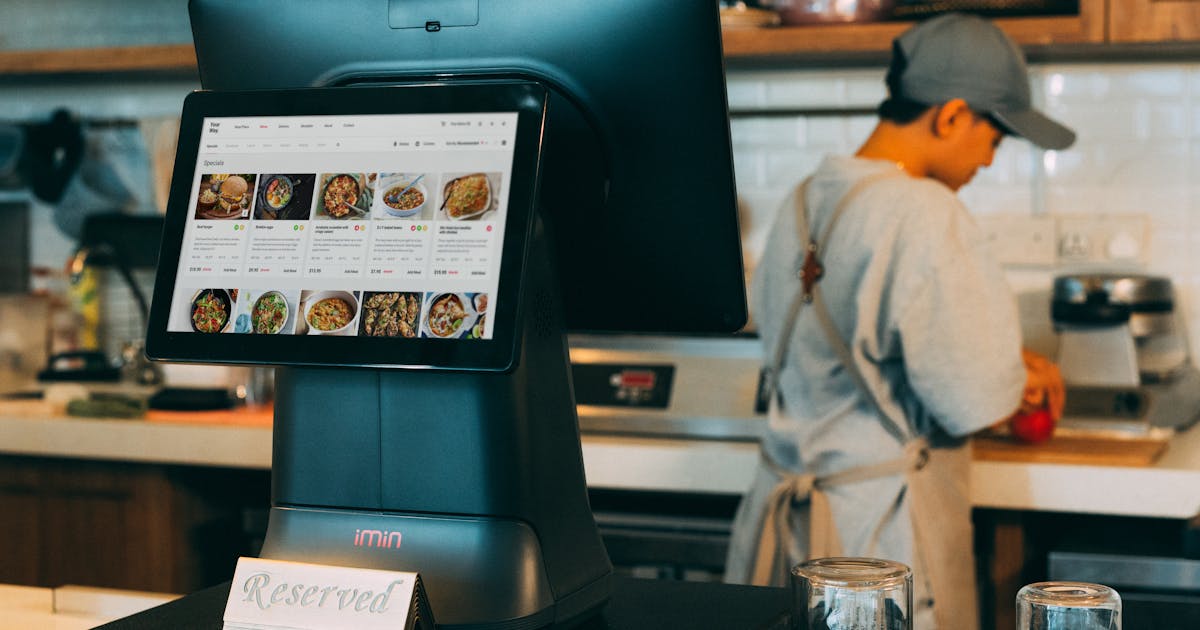
Walk into most Lebanese restaurants today and you'll find one of a few scenarios: a legacy Windows-based POS that the owner's nephew installed five years ago and nobody fully understands; a tablet running a global SaaS POS designed for US markets that doesn't handle the Lebanese pound situation well; a WhatsApp group for delivery orders managed by a cashier between serving tables; or paper dockets and a mental model in the head of the owner.
None of these scale. And as Lebanese restaurant operators face tighter margins and increasingly sophisticated customer expectations, the tech gap is becoming a business risk.
What Lebanese restaurants actually need
The requirements for restaurant technology in Lebanon are specific enough that global solutions almost never fit cleanly. Here's what operators tell us they need:
Multi-currency and exchange rate handling. The Lebanese pound situation has created a dual-currency reality for most restaurants. A working POS needs to handle LBP and USD pricing, apply the appropriate exchange rate at the time of transaction, and report accurately in both currencies. Most global POS systems handle this poorly or not at all. See also: How to Choose a POS System for Your Lebanese Business for the topic-specific playbook.
WhatsApp-native ordering. Lebanese customers don't download apps for every restaurant they order from. WhatsApp is the ordering channel: it has been for years. A restaurant tech system that doesn't integrate smoothly with WhatsApp ordering is missing the primary inbound channel.
COD and mixed payment support. Restaurants in Lebanon take cash, OMT, bank transfer, and occasionally card, often in the same transaction for catering orders. The POS needs to handle payment splits and mixed methods without workarounds.
Offline capability. Power cuts and internet interruptions are realities of operating in Lebanon. A cloud-only POS that stops working when the internet goes down is a liability in the Lebanese context. Local-first architecture with cloud sync is the right design.
Simple enough for the actual staff. Many Lebanese restaurant operators run lean teams, sometimes family-managed. The technology has to be usable by staff without extensive training or a dedicated IT manager.
Inventory that makes sense for Lebanese supply chains. Lebanese restaurant supply chains operate differently from European or US ones: more cash purchases, irregular delivery schedules, supplier relationships managed personally. Inventory management systems need to accommodate this flexibility rather than enforce rigid procurement workflows.
What global POS solutions get wrong for Lebanon
The dominant global POS solutions, Toast, Square, Lightspeed, and others, are excellent products built for their primary markets. In Lebanon, they run into predictable problems:
They're priced in USD with international billing, which creates payment complications for Lebanese operators.
Customer support is in a different time zone and doesn't understand local market requirements.
They assume reliable internet infrastructure.
They don't handle LBP or multi-currency well.
Their delivery integrations assume platforms like DoorDash or Uber Eats: not Toters, Munch.uy, or WhatsApp-direct delivery.
Their reporting and analytics assume single-currency, stable-economy operations.
RTYLR: built for the Lebanese and regional context
RTYLR is Voxire's commerce operating system, built specifically for the restaurant and hospitality operators that global solutions underserve. The design decisions in RTYLR reflect the actual operating environment of Lebanese restaurants rather than adapting a foreign product to a local context.
RTYLR handles multi-currency operation natively, with exchange rate management that the operator controls rather than a system default. It's architected for offline-first operation, with full POS functionality during internet outages and automatic sync when connectivity restores.
Order management in RTYLR accommodates WhatsApp-sourced orders alongside in-person and platform-based orders in a single flow, so your team isn't toggling between five different sources to understand what's coming out of the kitchen.
The inventory and reporting modules are built for Lebanese supply chain realities: flexible intake, manual override where needed, and reporting that tells you what you need to know without requiring you to input data you don't have.
The ROI of getting the tech right
Restaurant operators who've made the shift from legacy or duct-taped tech to a properly integrated system report similar outcomes: fewer errors, faster table turns, better inventory visibility, and, critically, time back for the operator to focus on the business rather than managing the system.
The tech stack isn't the restaurant. It's the infrastructure that lets you run the restaurant without it getting in the way.
If you're running a Lebanese restaurant or hospitality business on outdated or mismatched technology, it's worth exploring what a system built for your actual context looks like.
Learn more about RTYLR or get in touch with the Voxire team to discuss your specific operation.
If you are looking for a restaurant technology platform built specifically for Lebanese and MENA operations, RTYLR is Voxire's own commerce operating system, designed from the ground up for the way restaurants in this region actually work.
Want to see RTYLR in action for your restaurant?
RTYLR is Voxire's commerce operating system built specifically for Lebanese restaurants and F&B businesses. Fast setup, local support, and pricing that fits the Lebanese market.
Enjoying this article?
Enter your email and get a clean, formatted PDF of this article: free, no spam.
Voxire
Digital Marketing
Paid media, SEO, content, and lifecycle marketing across MENA. Google Ads, Meta, TikTok and Snapchat, measurement that survives the loss of third-party cookies, and campaign structures built to be audited rather than admired.
Learn more